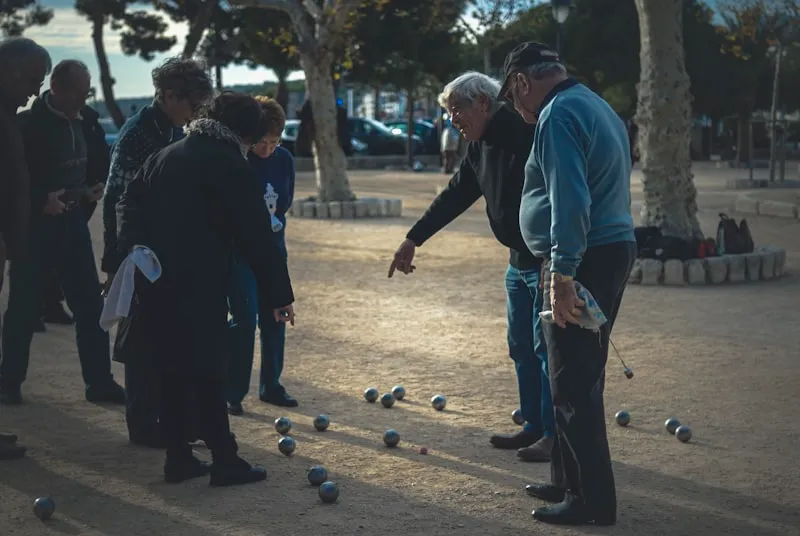
Spring Is Here: How to Get Back on the Court After Winter
After months of cold weather and indoor life, pétanque season is back. Here's how to warm up your game, avoid early-season injuries, and make the most of the first weeks back on the terrain.
The clocks have gone forward, the terrains are dry again, and the unmistakable clang of boules on gravel can be heard in parks across Europe. Spring is the best time to be a pétanque player — but jumping back in without preparation is a good way to start the season injured or frustrated.
Start Slower Than You Think You Should
Even if you spent the winter throwing indoors, outdoor pétanque uses muscles and proprioception that don’t fully activate on an artificial surface. Plan your first week back as easy social games rather than intense competition. Let your throwing arm reacclimatise to the longer outdoor distances.
Pay attention to your shoulder and elbow. The repetitive motion of throwing dozens of boules per session puts real strain on these joints, especially after an extended break. Ice after the first few sessions if you feel any inflammation.
Check Your Equipment
Pull your boules out of storage and inspect them. Check for:
- Rust spots in the engravings — treat with fine steel wool and a drop of oil
- Flat spots from accidental drops onto hard surfaces — hold each boule up to a light source and roll it; any wobble means the boule needs replacing
- Cracked jack — cochonnets split over winter from moisture and freeze-thaw cycles; always carry a spare
Wipe down your boules with a dry cloth, remove any grit from the engravings, and apply a very light coat of oil.
Terrain Reading After Winter
Winter changes terrains. Frost heave shifts flat courts into uneven surfaces; heavy rain compacts some areas and loosens others; tree roots push through what was previously smooth ground.
Spend the first few games studying how your local court behaves now. Watch how other players’ boules roll. Note where boules bounce unpredictably and where they stop cleanly. Good terrain reading is the foundation of consistent pointing, and you’re essentially starting with a new surface. Our guide to pointing techniques explains how to adapt your approach to different ground conditions.
Rejoining Your Club
If you’ve been away from your regular club, the start of spring is the natural moment to reconnect. Most clubs hold their first open tournaments of the year in April or May — sign up early, as entry caps fill quickly.
Check if your club has new members who’ll need help learning the game. Teaching pétanque accelerates your own understanding of its finer points more than almost any other practice method.
Setting Season Goals
Rather than vague intentions, set a concrete goal for this season:
- Improve your pointing accuracy to within 20cm at 9m, 8 times out of 10
- Win your first official tournament match
- Hit 40% tire rate at 8m consistently
Measurable goals give your practice sessions direction. Review them at mid-season and adjust — you’ll likely have exceeded one and fallen short on another. For tire-specific drills to build that accuracy, our guide to mastering the tire shot has a structured 30-minute programme.
Welcome back to the terrain. The grass smells like spring and the boules are warm in your hands. There’s nowhere else to be.
Read also: Mastering the Tire Shot: Pétanque’s Most Spectacular Move · Pointing Techniques Explained: Roulette, Demi-Portée, and Portée