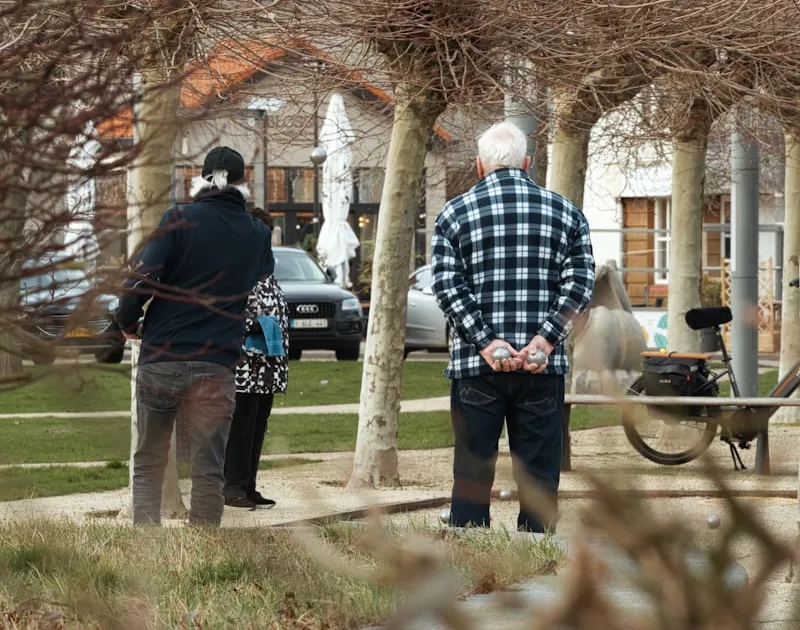
Pétanque Etiquette: The Unwritten Rules That Matter
Pétanque has official rules, but the game runs on unwritten ones. Knowing them makes you a player others want to compete with — and against.
Every sport has its official rulebook and its unwritten code. In pétanque, the gap between the two is unusually important — the game’s social character means that how you behave often matters more than whether you technically follow the rules.
Stand Still When Opponents Are Throwing
This is the most fundamental and most broken rule of amateur pétanque. When an opponent is about to throw, stop moving. Stop talking. Don’t rattle your boules together. The throw demands concentration, and interfering with it is both rude and a kind of cheating — you’re asking them to perform under artificial pressure.
The same applies to standing in a player’s line of sight. Move to the side, not directly behind or in front of the target.
Acknowledge Good Shots
When an opponent makes a remarkable point or an exceptional tire, acknowledge it. A brief “belle boule” or even a nod is the appropriate response. Pétanque players who refuse to recognise opponents’ good play are poorly regarded in any club.
This doesn’t mean you have to be enthusiastic — a dignified acknowledgment is fine. But silence in the face of something genuinely impressive reads as poor sportsmanship.
Measure Without Argument
When the game is close, measure correctly and accept the result. If you disagree about which boule is closer, both teams should approach the cochonnet and examine it together. If neither can agree, ask a neutral observer — ideally someone uninvolved in the game.
Never pick up a boule before all measurements are complete. A displaced boule is a contested boule, and disputes arising from premature pickup ruin rounds and friendships.
Don’t Slow the Game Down Excessively
Some deliberation is part of the game — reading terrain, deciding between a point and a tire, choosing your spot in the circle. But extended deliberation every single throw frustrates opponents and other players waiting for the terrain.
As a general guide: if you can see clearly and have enough information to make a decision, make it. Save extended deliberation for genuinely complex tactical moments.
Conceding Gracefully
When a round is clearly lost — your last boule played, opponents holding three points — say “c’est bon” (or its equivalent) and concede. Opponents will appreciate not having to physically measure a point they can plainly see they hold.
Conceding promptly keeps games moving and signals confidence. Demanding measurement on obvious outcomes looks like either bad eyesight or bad faith.
Handling Disputes
In informal games, disputes should be resolved between the teams with calm discussion. If agreement is impossible, agree to leave both contested boules in place and move on. In competition, call the referee.
Never pick up your boules and walk off because you lost a disputed point. It’s the nuclear option and irreparably damages a relationship within a club.
After the Game
At the end of each game — win or lose — shake hands with every member of the opposing team. Thank them for the game. This is not optional ceremony; it’s the formal close of competition and the re-establishment of social equals.
In many club settings, the losing team buys a round of drinks. This tradition is optional but generous in spirit. Whatever you do, don’t disappear immediately after a loss. Good company after a game is part of what makes pétanque pétanque.
These norms become even more important when you’re playing in a tournament setting — see our guide on how to organise a pétanque tournament for more on the competitive context.
Read also: How to Organise a Pétanque Tournament · Women in Pétanque: How the Sport Is Changing